31-08-2026
Ground-breaking ceremony at the Königshügel campus of RWTH
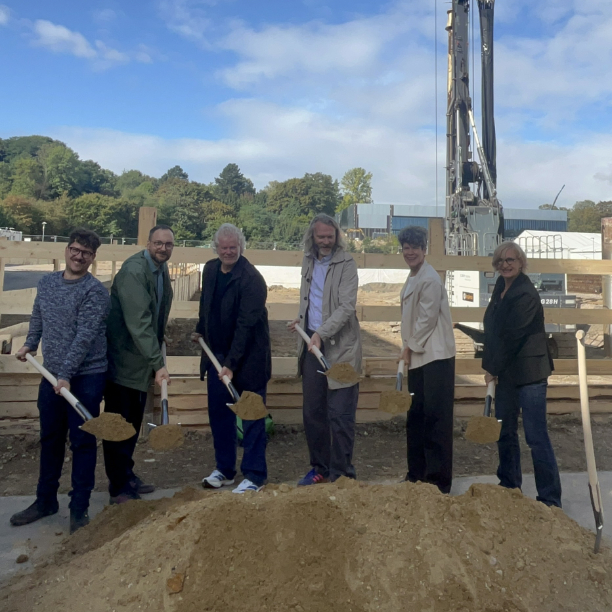
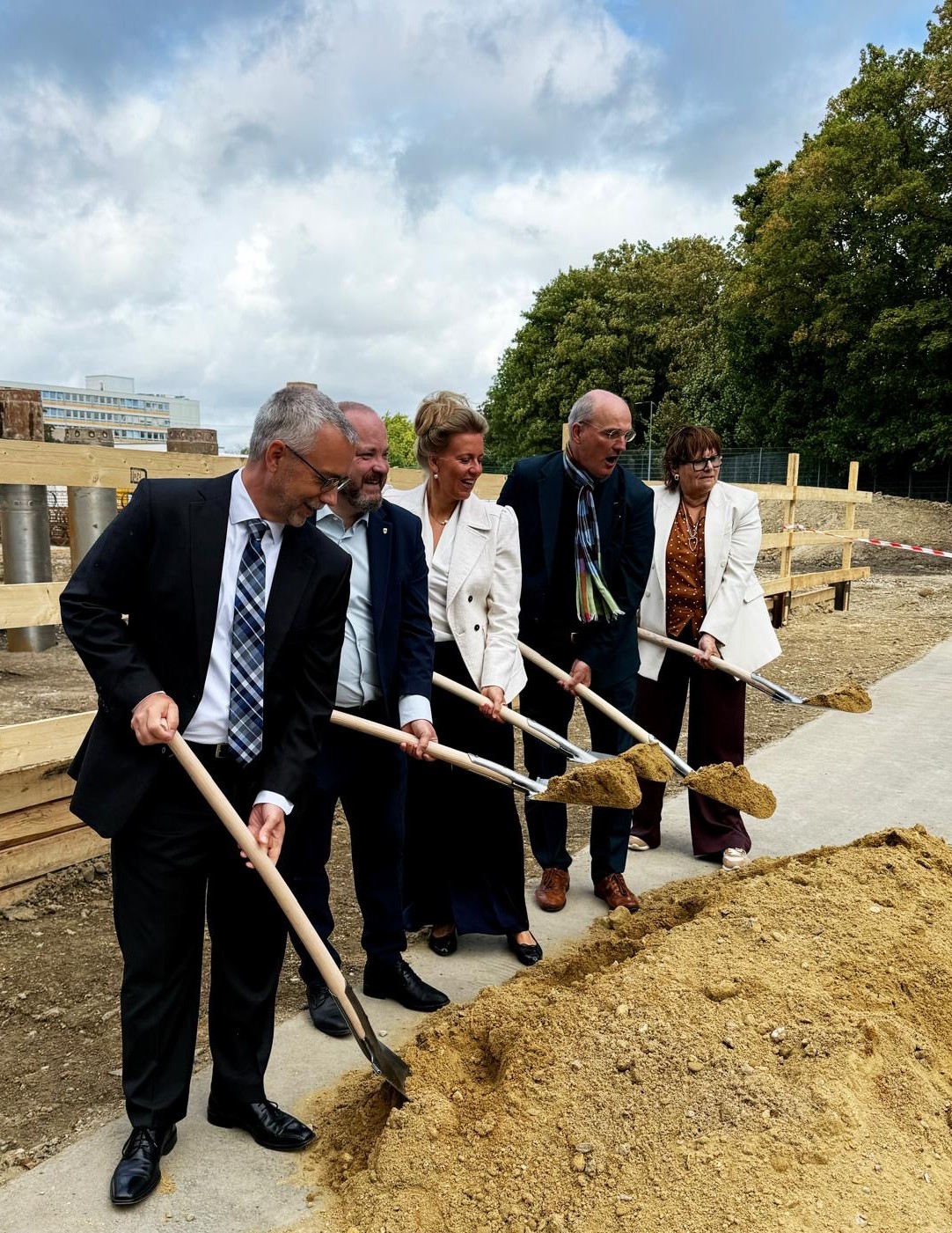
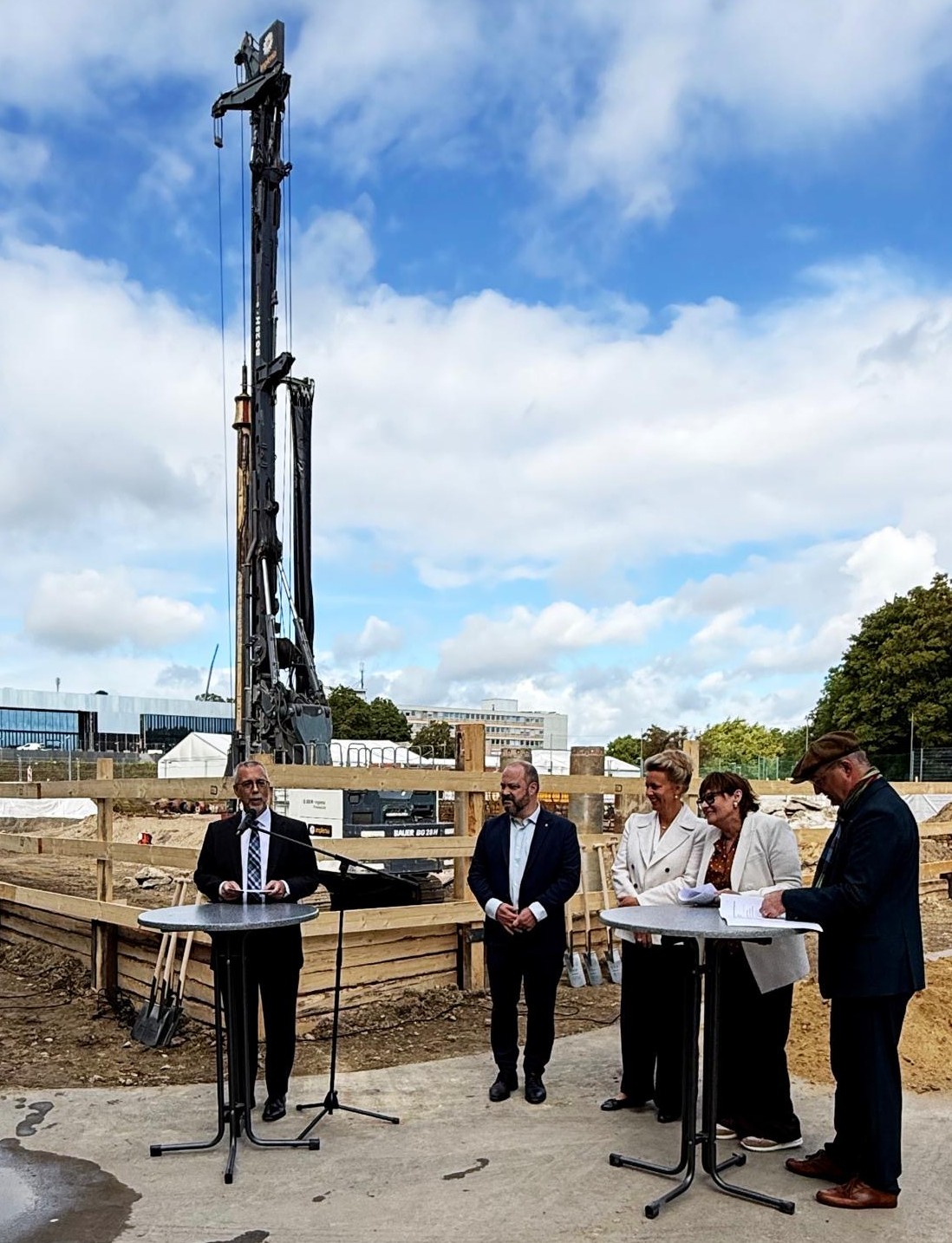
In the presence of Ina Brandes, Minister for Culture and Science; Gabriele Willems, Managing Director of the BLB; Dr Michael Ziemons, Mayor of Aachen; and Prof. Dr Ulrich Rüdiger, Rector of RWTH Aachen University, the ground-breaking ceremony for the AOC – the new replacement building for the Institute of Inorganic and Organic Chemistry – took place today on the Königshügel on the Hörn campus of RWTH Aachen University.
In her speech, Minister Ina Brandes praised the modern building and its state-of-the-art facilities. Prof. Dr Ulrich Rüdiger described the building as a double win for RWTH Aachen University. On the one hand, he said, excellent research requires state-of-the-art facilities, which the new building provides. On the other hand, the resource-efficient building fits in very well with RWTH’s sustainability strategy and demonstrates what is already possible in the construction sector when it comes to sustainability.
Representing KRESINGS were – alongside Kilian and Christian – the entire AOC project and construction management team.
The AOC has been with us for many years now, but is now set to be implemented swiftly. Completion is scheduled for 2029.
RWTH Aachen University is to build a new building for the Institutes of Inorganic and Organic Chemistry (AOC) on the Hörn campus. Findings from these key disciplines are of central importance, for example, for sustainable energy supply, modern medicines and diagnostics. This enables the development of innovative materials for batteries, solar cells and catalysts, amongst other things. The state of North Rhine-Westphalia is contributing around half of the construction costs.
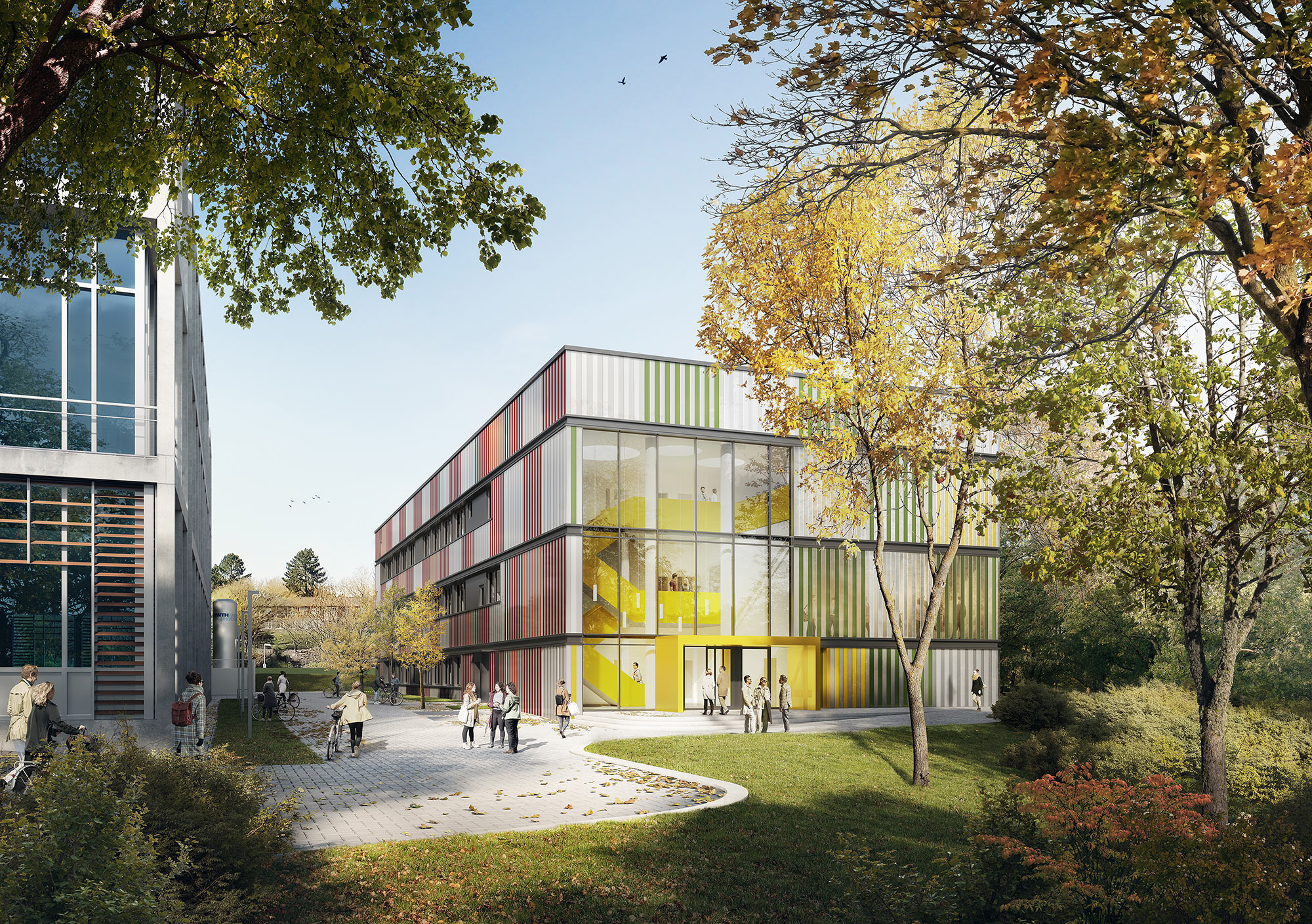
The new building on the Hörn campus combines complex laboratory infrastructure with a particularly resource-efficient construction method. The five-storey new building will house specialised laboratory and measurement rooms, a lecture theatre and offices across an area of 2,200 square metres. Furthermore, a façade made of coloured industrial glass and a striking open staircase in the atrium will define its appearance. Instead of traditional building materials, low-carbon cement and steel made from recycled scrap will be used. A photovoltaic system will in future generate solar power equivalent to the annual consumption of ten average private households. Heating, cooling and energy efficiency are designed to meet the latest energy standards. For example, a heat recovery system will be installed to utilise heat from the exhaust air in laboratories, lecture theatres and sanitary facilities for preheating.